

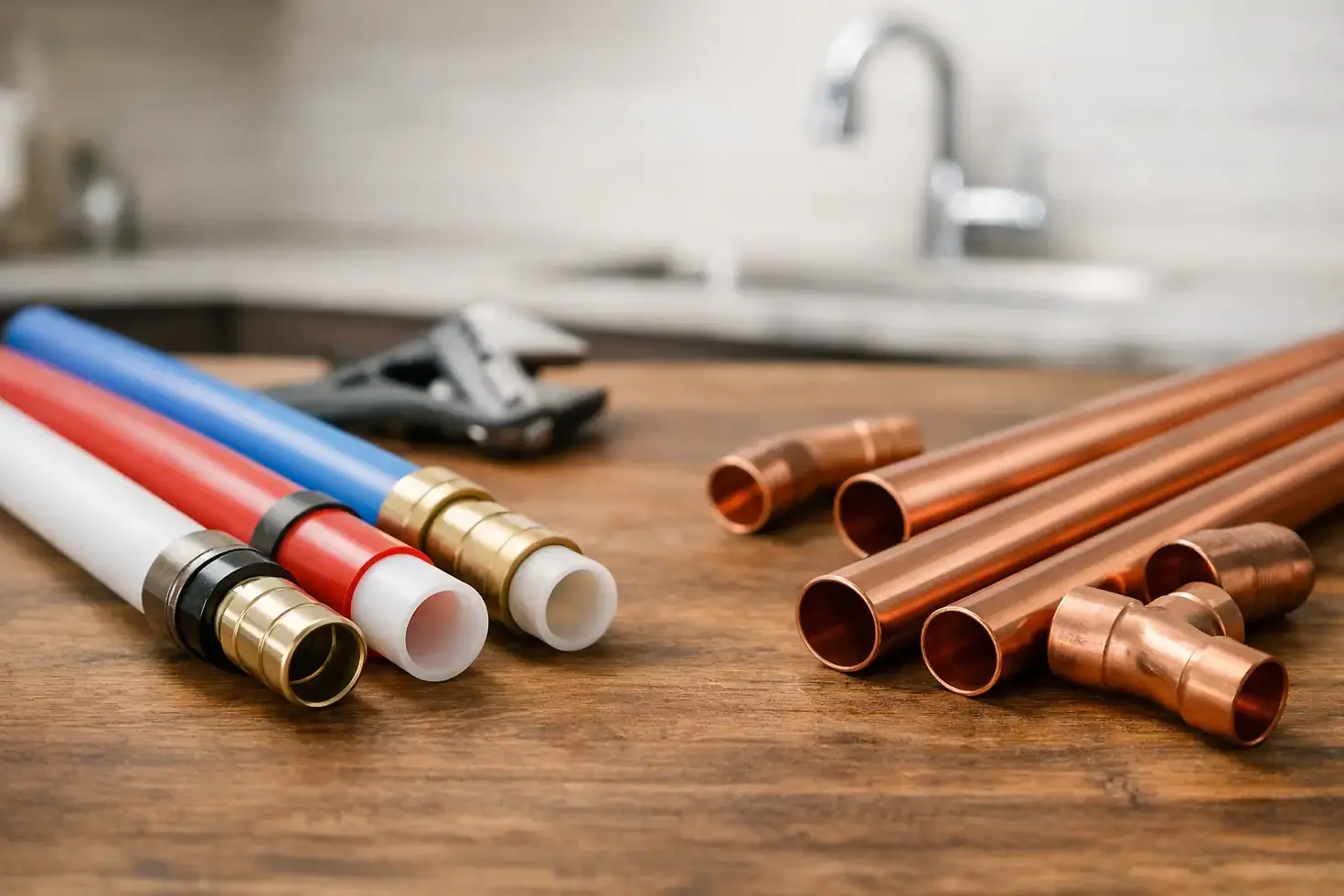
PEX vs Copper: Which Pipe Is Right for Your Home?
A pipe failure rarely happens at a convenient time. A pinhole leak behind a bathroom wall, low water pressure at the kitchen sink, or rusty water from an older line can quickly turn a small concern into a repair decision. When homeowners plan a repair or whole-home repipe, PEX vs copper is usually one of the first questions.
Both materials can provide dependable water service when they are properly installed. The better choice depends on your home’s age, the condition of the existing plumbing, local conditions, your budget, and whether the work is a targeted repair or a long-term upgrade. A licensed plumber should evaluate the system before recommending either material.
PEX vs Copper: The Main Difference
PEX is a flexible plastic tubing made from cross-linked polyethylene. It is used for hot and cold water supply lines and is common in newer homes, remodels, and repiping projects. Because it bends around corners, it can often be installed with fewer fittings and less wall opening.
Copper is a metal pipe that has been used in residential plumbing for generations. It is rigid, heat-resistant, and familiar to many homeowners and inspectors. Copper can last a long time, but its performance is affected by water chemistry, installation quality, and the condition of the surrounding environment.
Neither option is automatically right for every property. A newer home with an isolated leak may call for a simple repair that matches the existing system. An older Los Angeles County home with repeated leaks, corroded lines, or poor pressure may benefit more from a carefully planned repipe.
Why Many Homeowners Choose PEX
The main advantage of PEX is flexibility. A plumber can route the tubing through walls, ceilings, crawl spaces, and attics with fewer connections than rigid pipe often requires. Fewer hidden fittings can reduce potential leak points, and the installation may require less cutting into finished drywall.
PEX is also generally more affordable than copper for a full repipe. Material costs are typically lower, and installation can take less labor because the pipe is lighter and easier to route. For property owners working within a renovation budget, that difference can be meaningful.
PEX does not corrode the way metal pipe can. In areas where water conditions contribute to corrosion or scale buildup, this can be a major benefit. It also handles normal freezing conditions better than copper because the tubing has some ability to expand. That does not mean PEX is freeze-proof. Any water line can burst if it freezes hard enough, so exposed pipes still need proper protection.
Another practical advantage is quieter operation. PEX can reduce the sound of water moving through the plumbing and is less likely to create the sharp banging associated with poorly secured rigid pipes.
There are limits. PEX should not be installed where it will be exposed to direct sunlight for extended periods, since UV exposure can damage the material. It also must be protected from physical damage and installed with the correct fittings, supports, and clearance from heat sources. Good material does not replace good workmanship.
Where Copper Still Makes Sense
Copper remains a strong option for many homes. It has a long track record, handles high temperatures well, and is suitable for certain exposed plumbing locations where a rigid, durable pipe is preferred. It is not affected by sunlight in the same way as PEX, which can make it useful for specific applications.
Many homeowners also prefer copper because it is a familiar material with a proven history. In a home that already has copper lines in good condition, a small repair using copper may be the most straightforward approach. Matching the existing pipe can simplify the repair and avoid unnecessary transitions between materials.
Copper has disadvantages to consider. It costs more than PEX, both for materials and labor. Installation requires cutting, measuring, fitting, and soldering or pressing individual joints. That can make a large repipe more time-consuming, especially in a home with difficult access.
Copper can also develop pinhole leaks. This does not mean copper is poor-quality pipe. Pinhole leaks can be tied to water chemistry, internal corrosion, poor grounding practices, high water velocity, or other system-specific issues. Replacing one leaking section may solve the immediate problem, but repeated pinhole leaks are a reason to inspect the full plumbing system.
Cost Is More Than the Price of Pipe
Homeowners often ask which material is cheaper, and PEX is usually the lower-cost choice for a major repipe. But the final price is not based on pipe alone. Access to the plumbing, wall and ceiling repairs, fixture connections, permits, shutoff valves, water pressure concerns, and the size of the home all affect the project cost.
For example, a two-story home with pipes buried behind finished walls may require more labor regardless of whether the new lines are PEX or copper. A rental property may need work scheduled around tenant access. A remodel may offer open walls, making replacement easier and more cost-effective.
The most useful estimate is one that explains the scope of work clearly. Homeowners should understand which lines are being replaced, what material is proposed, whether permits are required, how the system will be tested, and what restoration work is included after the plumbing is complete.
Water Quality and Existing Pipe Condition Matter
If your home has discolored water, metallic taste, recurring leaks, weak pressure, or visible corrosion, the problem may be bigger than one damaged section of pipe. Galvanized steel lines, for instance, can corrode internally and restrict water flow over time. Replacing a short piece may not restore pressure if the rest of the system is heavily deteriorated.
A plumbing inspection can identify whether the issue is with supply piping, a pressure regulator, a water heater connection, a fixture, or another part of the system. It is also helpful to consider the age of the home and its plumbing history. Previous repairs made with several different materials can create a patchwork system that deserves a closer look.
Water quality plays a role as well. Certain water conditions can be harder on copper over many years. A qualified plumber can look for evidence of corrosion and help determine whether PEX, copper, or a combination of approved materials makes the most sense for the property.
Installation Quality Is the Deciding Factor
The PEX vs copper decision matters, but installation quality matters just as much. Improperly supported lines, incorrect fittings, poor connections, missing protective plates, and untested repairs can cause expensive damage with either material.
A professional installation should include properly sized water lines, secure supports, accessible shutoff valves where appropriate, safe routing away from heat and damage, and pressure testing before walls are closed. In a repipe, attention should also be given to fixture supply lines, water heater connections, hose bibs, and any sections that may have been overlooked during past repairs.
For homeowners in El Monte and nearby communities, working with a California State Licensed and insured plumbing contractor helps protect the home and the investment. AMC Plumbing brings 24 years of trade experience to repair and repiping decisions, with recommendations based on the actual condition of the plumbing rather than a one-size-fits-all answer.
When to Repair and When to Repipe
A single leak does not always mean you need a full repipe. If the pipe is otherwise in good condition and the leak is caused by accidental damage or an isolated failed fitting, a focused repair may be the practical choice.
A repipe becomes more reasonable when leaks keep returning in different areas, water pressure continues to decline, corrosion is widespread, or the existing pipe material has reached the end of its service life. It may also make sense during a major kitchen or bathroom remodel, when walls are already open and access is easier.
Before choosing, ask for a clear explanation of the pipe condition and the repair options. The right recommendation should account for what solves the current issue, what prevents repeated damage, and what fits your plans for the property.
A dependable plumbing system should not leave you guessing every time you see a water stain or hear a drip. Whether your home needs one repaired line or a complete upgrade, choosing the right material and having it installed correctly can give you more confidence every time you turn on the tap.


Comments