

Hydro Jetting Versus Snaking: Which Clears Drains?
A drain that keeps backing up is rarely just a minor inconvenience. Water in the tub, a kitchen sink that will not drain, or sewage coming up through a cleanout can interrupt the whole household. When comparing hydro jetting versus snaking, the right choice depends on what is blocking the line, where the blockage is located, and the condition of the pipe itself.
Both methods can restore drainage, but they work very differently. A professional diagnosis helps avoid spending money on a short-term fix when the drain needs deeper cleaning or repair.
How Hydro Jetting Versus Snaking Works
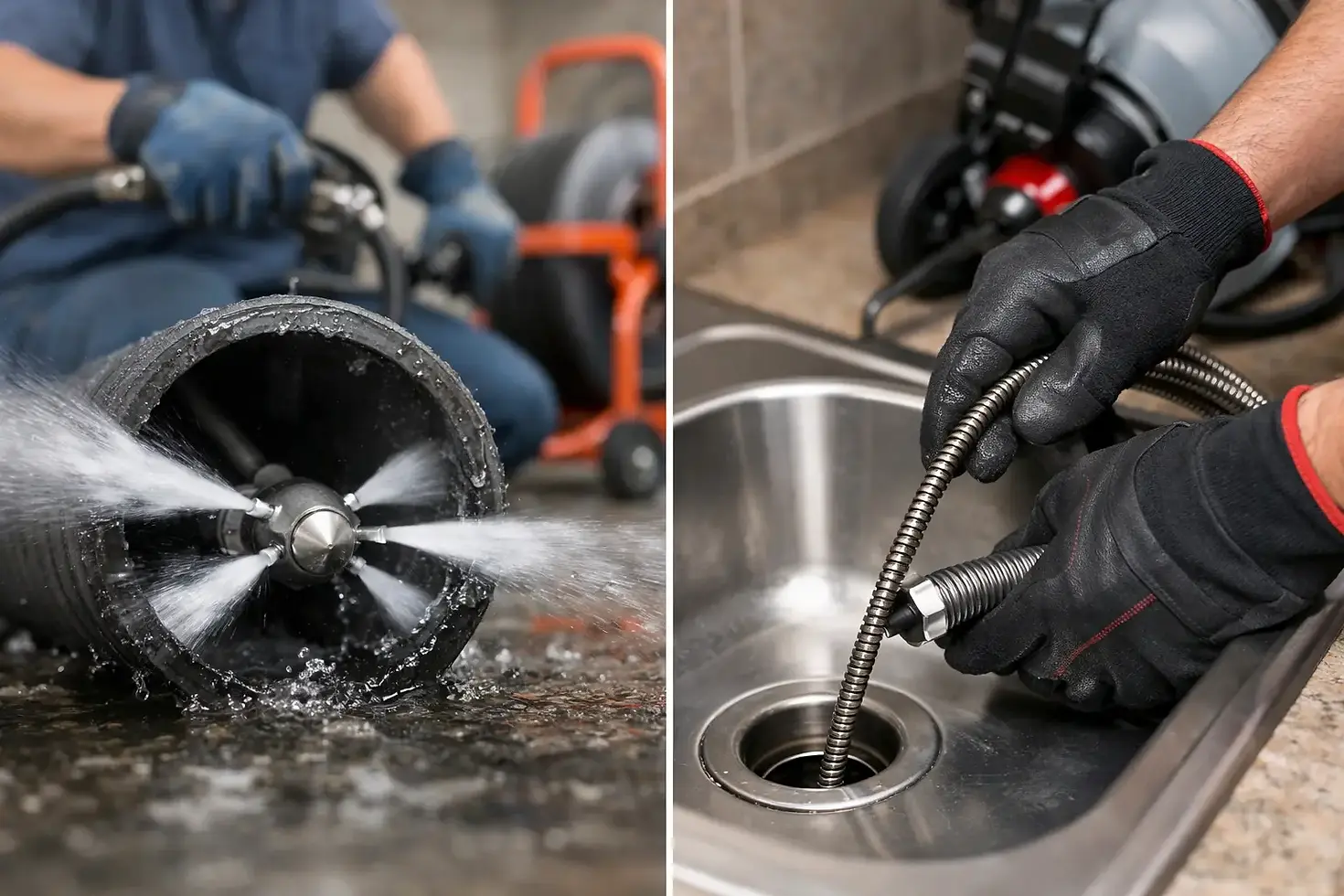
Snaking, also called cabling or drain augering, uses a flexible metal cable with a cutting or retrieval head. The plumber feeds the cable into the drain and works it through the blockage. Depending on the attachment and the type of clog, the cable may break up debris, cut through roots, or pull out material such as hair, wipes, and small objects.
For many everyday clogs, snaking is a practical first option. A bathroom sink or tub drain blocked by hair and soap buildup may clear quickly with the right cable and head. Snaking can also open a path through a blockage so water can begin moving again.
Hydro jetting uses a specialized hose and nozzle that sends pressurized water through the drain or sewer line. The water does more than punch a hole through the clog. It washes the inside walls of the pipe, helping remove grease, sludge, scale, soap residue, and other buildup that has collected over time.
That cleaning action makes hydro jetting especially useful for main sewer lines, kitchen drains with heavy grease buildup, and drains that clog again soon after being snaked. It is not automatically the best choice for every pipe, though. Water pressure must be matched to the line and its condition.
When Snaking Is the Better Drain-Cleaning Choice
A cable machine is often the sensible choice when the blockage appears isolated and the pipe is otherwise draining normally. If one bathroom fixture is slow and the issue is recent, a snake may remove the hair, tissue, or small obstruction causing the problem without the need for a more extensive service.
Snaking is also useful when the goal is to locate or relieve a blockage before deciding what comes next. For example, roots may be cut enough to restore flow. That can provide immediate relief, but it does not mean the roots cannot return through a damaged sewer joint or crack.
The trade-off is that snaking usually creates an opening through the buildup rather than fully cleaning the pipe walls. In a kitchen line coated with grease, a cable may get the water moving while leaving much of the grease behind. If the line clogs again a few months later, the original problem may be buildup throughout the pipe rather than one stubborn blockage.
A professional should choose the cable size and cutting head carefully. An improperly used cable can damage a fixture trap, scratch certain pipes, or become stuck in a compromised sewer line. Store-bought drain snakes can be helpful for a very minor, reachable clog, but they are not a replacement for professional equipment and diagnosis when backups are recurring.
When Hydro Jetting Is Worth It
Hydro jetting is generally the stronger option when a line needs to be cleaned, not merely opened. It is particularly effective for repeated main-line stoppages, grease-heavy kitchen drain lines, and buildup that has narrowed the inside of the pipe over years of use.
Rental properties can benefit from hydro jetting when multiple occupants and frequent use have contributed to drain buildup. The same is true for homes where a kitchen drain has been treated repeatedly with chemical cleaners or has a history of slow drainage. Chemicals often fail to remove the full blockage and may create added concerns for pipes and anyone working on the drain later.
Hydro jetting can also address root intrusion in some cases. The water can clear loose roots and wash away debris caught around them. However, roots get into a sewer line because there is an opening - often a cracked pipe, separated joint, or deteriorated connection. Jetting may restore flow, but a damaged line may eventually need repair or repiping to stop the problem at its source.
The important limitation is pipe condition. A severely corroded, cracked, collapsed, or poorly installed pipe may not be a good candidate for high-pressure cleaning. Before jetting an older or questionable sewer line, a sewer camera inspection can show whether the pipe is sound enough for the service and reveal issues that cleaning alone cannot solve.
The Most Important Step: Identify the Actual Problem
The symptoms can offer useful clues. A single slow sink often points to a local branch drain clog. Several fixtures backing up at once, water rising in a shower when a toilet is flushed, or sewage appearing near an outdoor cleanout often suggests a main sewer line issue.
Still, symptoms do not tell the complete story. A video inspection can show whether the line has grease buildup, roots, scale, a foreign object, a belly where water and waste collect, or a broken section of pipe. It can also confirm whether a line is clear after service.
This is why the lowest-cost option is not always the most affordable option. Repeated snaking can become expensive and frustrating if heavy buildup or a damaged sewer pipe is causing the recurring blockage. On the other hand, hydro jetting a line that has a serious structural problem will not correct the underlying damage. The goal is to use the right service once the condition of the plumbing is understood.
Common Situations and the Right Approach
For a hair-clogged bathroom drain, snaking is often enough. The clog is usually close to the fixture, and a cable can remove the material quickly.
For a kitchen line that slows down regularly, hydro jetting may offer longer-lasting results because it removes grease and food residue from the pipe walls. Avoid sending cooking oil, coffee grounds, eggshells, and fibrous food scraps down the disposal, even after the drain has been cleaned.
For a sewer line with roots, cabling may be used to cut a path and relieve an active backup. Hydro jetting may then be appropriate for more thorough cleaning if a camera inspection shows the pipe can handle it. If roots keep returning, repair or replacement should be considered instead of treating the same symptom year after year.
For an older home with cast iron, clay, or unknown sewer piping, inspection comes first. Some older lines remain serviceable and can be cleaned safely. Others may be brittle, offset, or deteriorated enough that cleaning pressure or cable work needs to be approached with added care.
Protect Your Pipes Before the Backup Gets Worse
Do not keep flushing a toilet or running water into a drain that is backing up. That can turn a manageable clog into water damage or a sanitation problem. Avoid chemical drain cleaners as well. They can be harsh on certain pipes, do not resolve many serious blockages, and can make later drain service more hazardous.
If you are dealing with repeated clogs, slow drains throughout the home, foul sewer odors, or a backup near the cleanout, it is time for a licensed plumber to assess the line. AMC Plumbing brings 24 years of trade experience to drain cleaning, hydro jetting, sewer video inspections, and pipe repair for homeowners and property owners in El Monte and surrounding Los Angeles County communities.
A clear drain is good, but a clear answer is better. Getting the line inspected and choosing the method that fits its condition can help protect your home, avoid repeat backups, and keep a small plumbing issue from becoming a larger repair.


Comments